

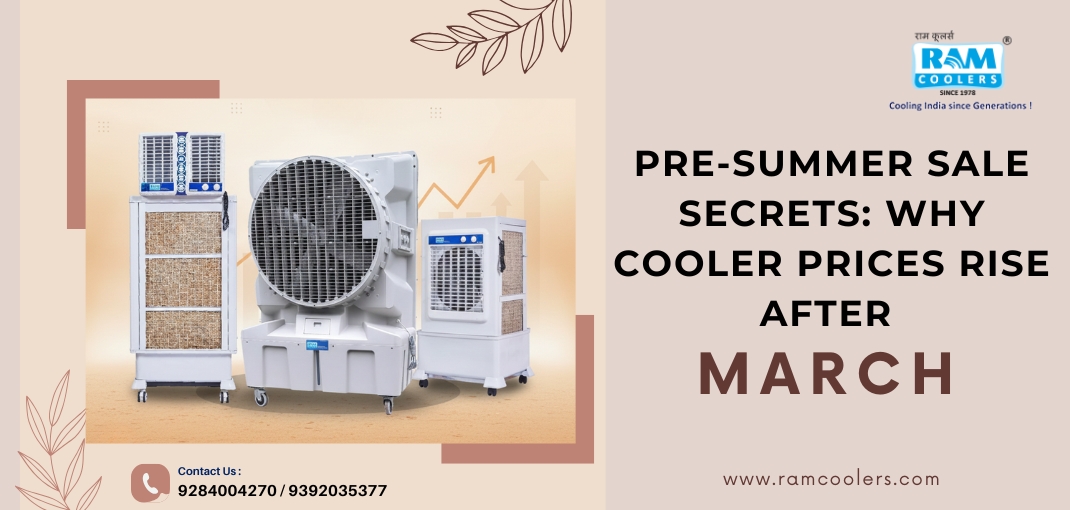
Every year, as March ends and the sun begins to blaze more fiercely across India, one phenomenon becomes almost predictable – cooler price trends in India start shifting. The question on many minds is: Why do Cooler Prices Rise After March? At Ram Coolers, we’ve closely watched these patterns for over two decades, supplying cooling solutions to homes, offices, and shops across the country. We know when to buy, why prices change, and how to get the best deal.
In this post, we’ll share insider knowledge about pre-summer cooler sale tips, reveal the core air cooler price increase reasons, and frame a summer cooler buying guide so you understand the market – and get maximum value. Whether you’re shopping for the best time to buy an air cooler in India or want to navigate seasonal price trends for coolers skillfully, this is your comprehensive manual.
We’ll also discuss cooling products price fluctuations, how air cooler demand in summer India drives those fluctuations, and share affordable cooler purchase tips and seasonal shopping tips for appliances, which can save you money – if you know when to strike.
What Drives the Cooler Price Trends India – Why Cooler Prices Rise After March
Early Summer Heat and Spike in Demand
As spring fades into summer, the heat begins earlier each year in many regions. Once temperatures routinely cross the comfortable zone and move toward 35-40°C, families start thinking about cooling. In many households, this push begins right after March.
Many news reports and market studies have shown a clear correlation between rising temperatures and increased demand for cooling appliances – ACs, fans, and air coolers alike.
When demand surges, retailers stock up – but manufacturers struggle to meet sudden spikes. That supply-demand mismatch becomes one of the main air cooler price increase.
In cities like Bengaluru and Pune, last year, cooler and AC prices jumped by 15–20% as summer gripped early, reflecting exactly this demand-driven effect.
Supply Chain Pressures & Input Cost Increases
Another under-discussed factor behind price hikes is the supply chain and raw material cost pressures. As demand surges, component suppliers – plastic parts, motors, honeycomb pads – feel the burden.
Recent reports from appliance manufacturers indicate that, beyond seasonal demand, rising input costs (due to global inflation and material scarcity) have led to incremental cost hikes across cooling products.
When manufacturers pass some of those costs to retailers, cooler prices naturally edge up – a key structural reason underlying cooler price trends in India.
Stock Clearance & Changing Models – Why Pre-Summer Discounts Are Rare
During winter or in off-season months (November to January), cooler manufacturers and retailers often sell leftover stock of previous models at discounted prices. This is when many buyers get the best deals.
But as March approaches, winter discounts vanish. Retailers begin restocking new models to meet the expected summer demand. During this restocking, older, cheaper models become scarce – reducing bargain options. In short, the best time to buy an air cooler in India is before March, when discounts and clearance sales peak.
By April, with fresh demand and fewer discounts, prices rise, contributing to cooling product price fluctuations that disadvantage late buyers.
Panic Buying & Consumer Behavior Amplify Price Hikes
When the mercury rises quickly, a wave of panic buying sweeps across households. Families don’t want to wait – they want relief. This sudden surge often leads to empty shelves. Dealers know this – and they adjust margins accordingly.
In many small towns and cities, our dealers report a 25–35% jump in cooler demand by early April compared to February. Many stores even limit per-customer purchases due to stock constraints.
This rush – driven by fear of heat and urgency for comfort – becomes one of the most powerful triggers behind Why Cooler Prices Rise After March.
Pre-Summer Cooler Sale Tips: When & How To Buy Smart
Buy Early – Best Time to Buy Air Cooler India
If your goal is to get good value, pre-summer (January–February) is the golden window. This is when manufacturers clear earlier models, retailers offer discounts, and demand remains modest.
These pre-summer cooler sale tips align with when stocks are ample, newer models are yet to be launched, and there’s no rush. Early buyers often save 10–20% compared to summer rates.
Monitor Price Patterns – Seasonal Price Trends for Coolers
From our sales data and retail market feedback:
- December–January: 10–15% discount window on older stock
- February: Stable low-demand period – prices often stable or marginally reduced
- Early March: Slight uptick begins as summer plans emerge
- Mid-March to May: Peak demand, prices climb steadily (often 15–25% above off-season)
- Post July: Demand begins to fall, but used/discounted units remain rare — not ideal for savings
Understanding these seasonal price trends for coolers helps you avoid paying premium rates in panic.
Compare Multiple Brands & Models – Don’t Rush Into First Deal
When demand surges, many buyers settle for whatever is available. But if you can wait a couple of days and compare at least 2–3 retailers or brands, you may find better deals.
Look for:
- Discounted older models
- Warranty benefits
- EMI or financing offers
- Brand promotions
Taking time to compare can reduce final cost by up to 8–10%.
Consider Value, Not Just Price: Longevity, Features & Efficiency
Low price does not always mean value. Buying a low-cost cooler with poor airflow or high power consumption may cost more in the long term.
Instead, focus on features such as:
- Efficient water-use and good air throw (for Indian summers)
- Durable build & cooling pads
- Warranty and after-sales support
This mindset of value over bargain tends to yield better comfort and savings overall – aligning with cost-effective cooling for homes.
How Air Cooler Demand in Summer India Affects Price – Real Market Insights
Sales Surge Reflects Cooling Demand & Drives Price Up
Multiple media reports from 2024–2025 show a dramatic increase in cooling appliance demand across India as summer begins early. Retailers in cities like Pune, Indore, and others observed a 25–30% rise in cooler/AC inquiries and purchases by March compared to last year.
Some winters before March recorded the hottest start in decades, which means demand has started hitting earlier. This shifting climate pattern compresses the “off-season” window and leads to earlier and sharper demand spikes – a major reason cooler price trends in India have become more volatile.
Supply Constraints, Manufacturing Lag & Component Shortage
As demand rises, manufacturers struggle to keep up – especially when raw materials like plastic, metal, and motors see price increases. Many brands are forced to raise prices slightly to maintain margins or to manage supply shortages.
This shortage also pushes buyers toward more affordable coolers – increasing demand in that segment even more, which further drives up their prices.
Consumer Shift: Coolers over ACs – Driving Cooler Demand Higher
When AC prices rise (because of higher demand and component shortages), many middle-class families shift toward air coolers. This switch adds fresh demand for coolers, increasing their price pressure. Recent reports show several customers postponing AC purchases in favor of coolers this summer because of price hikes and installation delays.
This additional demand from AC-shift further explains why cooler prices rise after March – the market pressure is not limited to cooler buyers alone.
Summer Cooler Buying Guide: Smart Moves to Get Value
1. Plan & Buy Before Heat Peaks
If possible, buy coolers in January–February. This is the classic recommendation in any summer cooler buying guide because you avoid the peak demand rush and catch discounts.
2. Watch Regional Weather & Forecast Trends
If forecasts show early summer or heatwaves (as often seen in northern and western India), expect demand – and prices – to spike. Using that information helps you anticipate cooler price trends India and plan purchases accordingly.
3. Choose Reliable, Energy-Efficient Models
Go for brands with proven durability and efficient cooling (good airflow, strong fan motors, quality cooling pads). These models deliver better performance in Indian summers and typically need less maintenance – giving more long-term value.
4. Compare Across Sellers & Check for Hidden Costs
Beyond upfront price: check installation charges, warranty terms, after-sales service, spare parts availability. A slightly higher price with good after-sales service is often better than a cheap model that breaks quickly.
5. Keep an Eye on Discounts, Offers & EMI/Finance Deals
Pre-summer and festival-season offers (Diwali, New Year) can bring additional savings – especially on models from previous seasons. These pre-summer cooler sale tips can help you secure a deal before prices climb drastically.
6. Avoid Panic Buying – Resist Last-Minute Rush
Prices surge when everyone buys simultaneously. If heat isn’t unbearable yet – wait a few days. Often, stock replenishes, and prices normalize. This strategy aligns with affordable cooler purchase tips seldom discussed.
Why Even Background Trends Matter – Long-Term Cooling Product Price Fluctuations
Inflation & Raw Material Price Volatility
Just like any other goods, cooling appliances are subject to inflation and raw-material cost changes (plastics, metals, motors). When raw material costs rise, manufacturers pass the burden down – resulting in higher shelf prices even before the heat begins.
Changing Consumer Habits & Urbanization
With more households using cooling appliances, demand pressure increases every passing year. Rapid urbanisation, rising incomes, and growing expectations for comfort amplify demand – meaning cooler price trends in India aren’t just seasonal, but structural.
Supply Chain Issues & Production Bottlenecks
Global supply chain disruptions, logistics delays, and increased demand globally affect manufacturers. For instance, compressors, motors, and plastic parts may face delays – leading to slower production and fewer units reaching retail, which again pushes up prices.
All these factors combine to compress the purchasing window and make timing more important than ever – hence the wisdom behind a solid summer cooler buying guide.
Real Customer Scenario: How Pre-Planning Saved a Household Big
Consider Mr. and Mrs. Sen from Nagpur – last year, they realized in early February that summer was expected to be intense. Instead of waiting for March (when the heat always hits hard), they bought a 70-litre cooler from Ram Coolers during a clearance sale.
They paid ~₹6,200. By April, the same model’s price had gone up by nearly 18% in their local market due to a demand surge. Because they bought early, they not only saved money but also avoided long waiting lists, when many buyers found “sold out” signs.
In summer, everyone else was scrambling for stock; the Sens were enjoying cool air comfortably and saving ~₹800–1000/month on electricity and cooling costs compared to older models.
That real-life example shows how pre-summer cooler sale tips, seasonal shopping tips for appliances, and being aware of cooler price trends in India can make a big difference.
Conclusion – A Word from Ram Coolers
At Ram Coolers, our priority has always been to deliver comfort – not just through machines, but through value, insight, and timing. From our decades of experience, one truth stands out clearly: the best deals on air coolers are always before the summer panic begins.
Understanding why cooler prices rise after March is not a secret – it’s logic blended with behaviour: early heatwaves, rising demand, supply pressure, and shifting consumer trends. When you know these patterns, you gain power.
So remember these guiding principles:
- Plan ahead, buy early (Jan–Feb)
- Watch for discounts and clearance sales
- Avoid panic buying – resist the rush
- Compare models, not just price
- Prioritize long-term value over short-term savings
If you follow these summer cooler buying guide tips, you don’t just get a cooler – you get comfort, savings, and peace of mind.
We at Ram Coolers encourage every buyer to be smart, strategic, and value-oriented. Because real comfort is not about soaring prices – it’s about wise choices.
Stay cool. Save smart. Choose right.
>>Also Read: Best Cooling for Hot Indian Climates: Duct Coolers vs Traditional Systems
Frequently Asked Questions (FAQs)
Q. Why do air cooler prices go up after March every year?
Ans. Air cooler prices rise after March primarily because demand surges with rising temperatures, supply often lags, and many retailers adjust prices to match demand, leading to the cooler price trends we commonly observe.
Q. When is the best time to buy a cooler in India?
Ans. The best time to buy an air cooler is in the pre-summer period (January–February) when demand is low, older inventory is discounted, and you can avoid the rush and price hikes.
Q. Are there really good deals before summer?
Ans. Yes. During the off-season, many retailers offer clearance discounts on previous season models – often 10–20% off – making this an ideal time for savvy buyers using pre-summer cooler sale tips.
Q. I waited till April – is there still hope for a good price?
Ans. After April, prices typically begin rising. However, if you compare sellers, check for last-minute unsold stock, or opt for less in-demand models, you might land moderate discounts – though chances are slimmer.
Q. How much price increase is usual in peak season?
Ans. Based on recent market data, cooler prices in many cities rise by 15–25% between the off-season and the peak summer buying period.
Q. Should I buy a cooler based only on price or choose features too?
Ans. Always consider features – cooling capacity, build quality, airflow, warranty, and brand reputation. Choosing value over low price ensures long-term comfort and fewer maintenance headaches – which aligns with the spirit of cost-effective cooling for homes and hot climate air cooling tips.
Follow Us on Social Media! Stay Connected & Stay Ahead!